BlackItaly
The project is funded by the Italian Ministry of University and Research as part of the FIS 1 Call (FIS 00003030; CUP D53C23002720001).
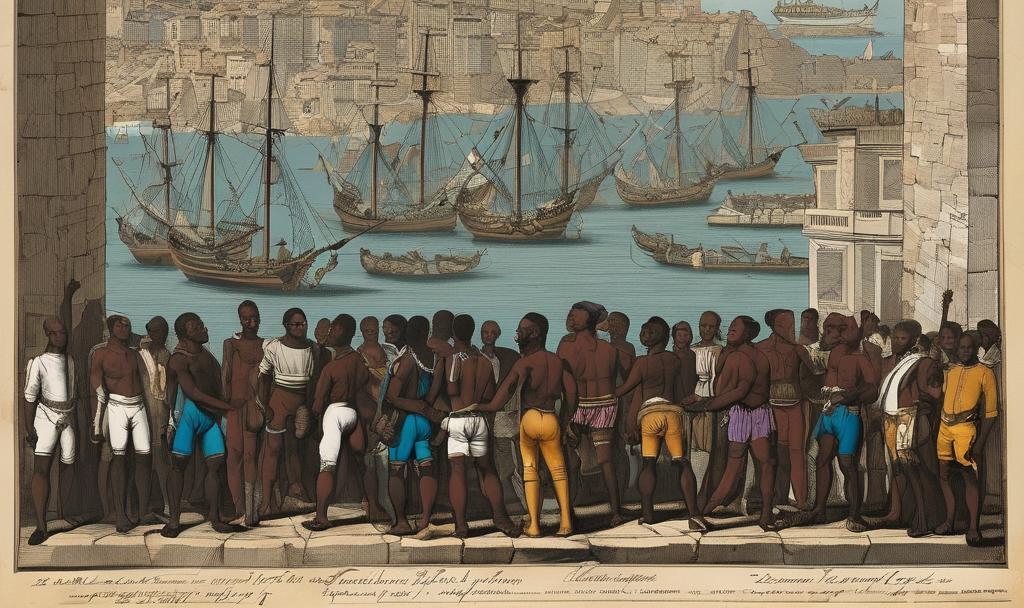
BlackItaly’s main objective is to reveal the strong connection between the Italian peninsula and the Atlantic slave system from the late mid-15th century, when sub-Saharan slaves began to reach Western Europe through the new Atlantic routes, until the second half of the 19th century and the sunset of the abolitionist debate.
By investigating the involvement of merchants, bankers or investors from the Italian peninsula in the Atlantic slave system, by uncovering the stories of black African slaves who lived in different cities and provinces of the peninsula, and by collecting the main ideas that circulated in favor of or against Atlantic slavery and the slave trade, BlackItaly aims to place the Italian peninsula in a global context and to consider the emergence of racial categories as a long-term phenomenon closely linked to the Atlantic experience, thus going beyond the Italian colonial experience in Africa and fascism
African Voices against Slavery
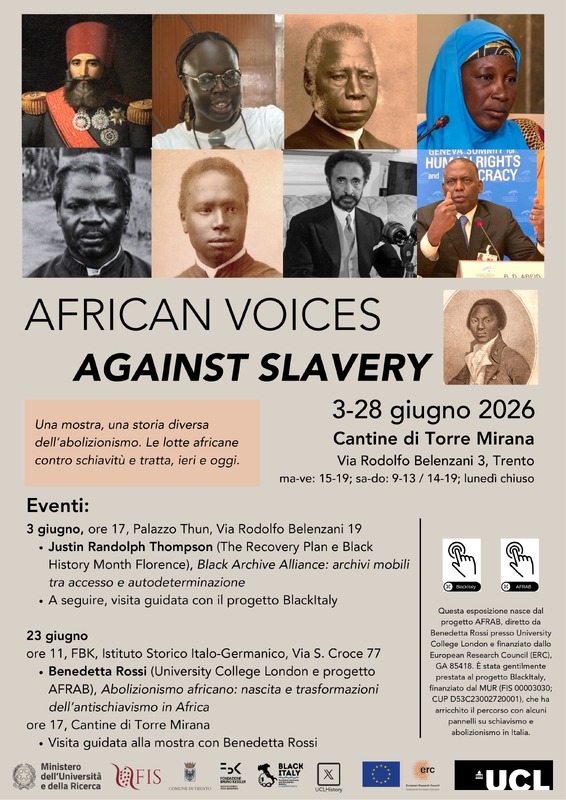
Dal 3 al 28 giugno 2026 sarà apeta a Palazzo Thun (Trento) la mostra African Voices against Slavery, una mostra risultata dal progetto di ricerca African Abolitionism: The Rise and Transformations of Anti-Slavery in Africa (AFRAB), finanziato dall’European Research Council nel quadro della ricerca e programma di innovazione European Union’s Horizon 2020 (accordo finanziario n. 885418) e coordinato dalla prof.ssa Benedetta Rossi (University College London) dal 2020 al 2025.
Dopo le tappe al Museo Nazionale di Lagos (Nigeria), al Fort Jesus Museum e Heritage Site di Mombasa (Kenya), al Museo degli Studi Etiopi di Addis Abeba (Etiopia) e all’University College di Londra (UCL), la mostra approda ora a Trento, per la prima volta in Italia, grazie alla collaborazione con il progetto Black Italy. The Italian Peninsula and the Atlantic Slavery: a Forgotten History e con l'Istituto Storico Italo-Germanico della Fondazione Bruno Kessler.
La mostra evidenzia il ruolo delle voci africane nell’abolizione della tratta e della schiavitù dall'epoca moderna a oggi. Attraverso immagini e testi, viene messo in risalto il ruolo svolto da attivisti e attiviste africane nell’eliminazione di uno dei fenomeni più drammatici della storia: la riduzione di esseri umani in schiavitù e la loro deportazione.
Il progetto Blacck Italy, che indaga il coinvolgimento della penisola italiana nella tratta e nella schiavitù atlantica, così come la presenza di schiavi africani in Italia durante l’epoca moderna, condivide pienamente l’approccio della mostra African Voices against Slavery di porre al centro dell’analisi le esperienze delle persone schiavizzate, le loro condizioni di vita, le forme di discriminazione subite, nonché le strategie di resistenza, adattamento ed emancipazione da essi elaborate.
L’allestimento della mostra è a cura di Alessandra Rossi.
Press Review
Interview, Telepace Trento, 20/06/2026
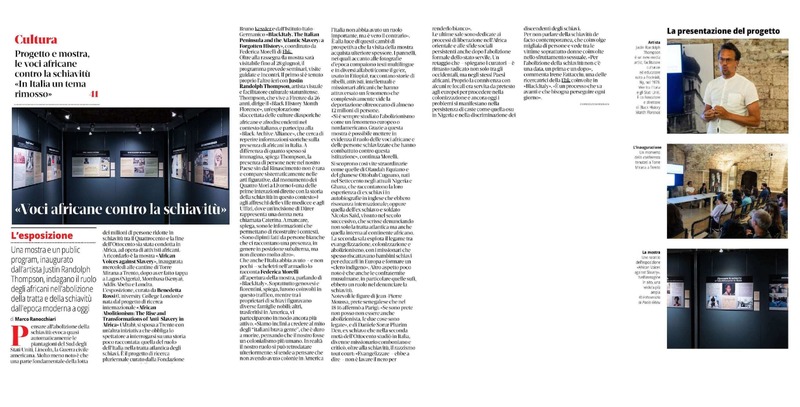
Schiavitù, una lunga storia ancora da indagare, by Farian Sabahi, in «Il Manifesto», 22/06/2026
News
Claudio Fogu e Federica Morelli hanno organizzato tre panel dal titolo Mediterranean Blue(s), Black and White, or Multicolor? all'interno della conferenza dell'AAIS (American Association for the Italian Studies) (Sassari, 3-5 giugno 2026).
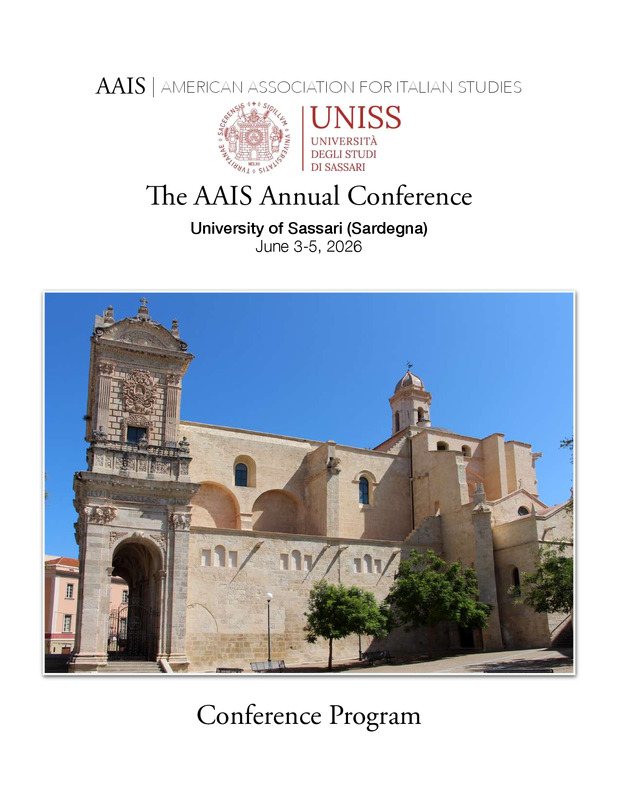
Mediterranean Blue(s), Black and White, or Multicolor? Organizers: Claudio Fogu (UCSB), Federica Morelli (FBK-ISIG) Description: In recent years, several theoretical paradigms have been mobilized to contextualize Italian history, arts, and culture within a Mediterranean framework of reference. The Black Mediterranean, post-and decolonial theory, metageography. Southern Thought, island studies, ocean studies, and environmental humanities are among the most prominent. Yet, despite their common geographical referent the "Mediterranean", however conceived, researchers have struggled to put their different theoretical orientations in dialogue with each other. This panel aims to start the conversation by calling on scholars exploring the relationship between Italy and the Mediterranean to present specific applications of different theoretical paradigms to their research. Speakers: Benedetta Chizzolini (Tel Aviv University,) “Mediterranean Blackness: Sub-Saharan Africans and Baptismal Records in Naples (16th-17th centuries)” Stephanie Malia Hom (University of California Santa Barbara), “Geographies of Power in a Transnational Mediterranean: Slavery, Colonialism, Italy” Erica Moretti (Fashion Institute of Technology, SUNY), “Intimate Politics: Families, Mobility, and the Afterlife of Empire in the Mediterranean” Valerie McGuire, (University of Texas, Austin), “Italians in the Maghrebi Archipelago: Between Isolation and Integration in French North Africa” Federica Morelli (Bruno Kessler Foundation (ISIG-FBK)), “The Italian Peninsula and the Atlantic Slave Trade: A Different Perspective on the Black Mediterranean” Stefano Muneroni (Università of Alberta, Canada), “Beyond and Beneath the Surface: A Volumetric Approach to Mediterranean Migration” Lorenzo Fabbri (University of Minnesota), “The White Mediterranean: Power, Race, and Melodrama in the Mare Nostrum” Laura Sarnelli (UCSB), “Sexing the Mediterranean: Views from Naples” Jennifer Scappettone (University of Chicago), “Geopoetics of the Mediterranean: Emilio Villa’s Idrologie and the Rejection of ‘Europe’”,
Read the news